Stop Wasting Water! A Crossover Strategy Guide for Multifamily Asset Management
Water-Energy Nexus: Crossover Report
In a study commissioned by the California Energy Commission (CEC) in 2017, out of approximately 100 multifamily buildings tested with crossover detection methods about 50% had crossover.
 Crossover occurs when an apartment building’s hot water and cold water sources mix in the pipes, often due to leaking or failed valves. Crossover wastes energy, diminishes tenant comfort, increases bills, and increases greenhouse gas emissions (GHG) in California. It also presents a challenge for existing-building electrification. Given the prevalence of crossover in multifamily properties and the prominent role these buildings play in the state’s efforts to combat climate change, state policies must treat crossover as a significant barrier to both energy efficiency and decarbonization efforts.
The Association for Energy Affordability and the California Housing Partnership, supported by the San Francisco Foundation, co-authored this Crossover Report as a toolkit to guide multifamily building owners, asset managers and sustainability teams with targeted crossover investigation and repair strategies. It is organized into two parts:
PART I – Crossover Diagnosis and Repair
- Misdiagnosis
- Owner Identification & Repair Strategies
- Common Causes of Domestic Hot Water Delivery Complaints
Sample Guidance: Building-Wide Investigation & Repair Strategies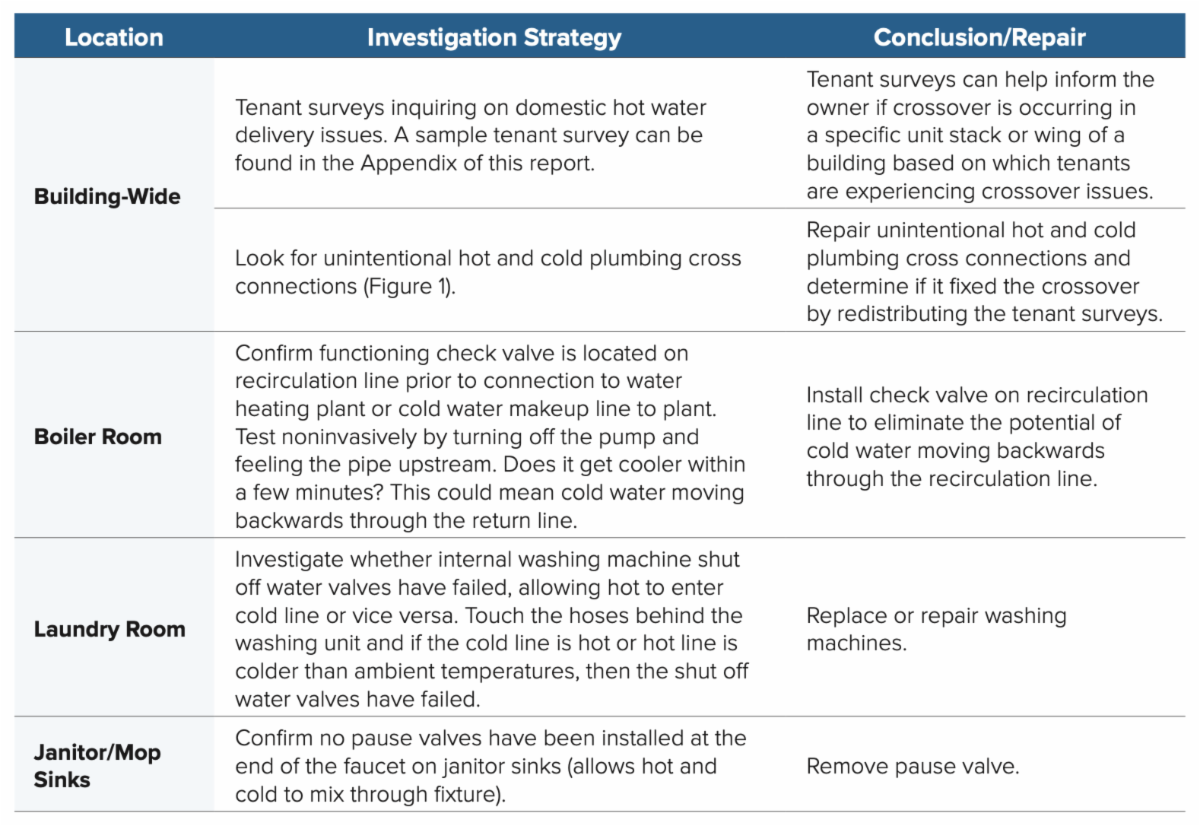
PART II – Crossover Investigation and Testing
- Methodology
- Case Studies & Benchmarking
Sample Methodology: Temperature Logger Data Pre- & Post- Crossover Repair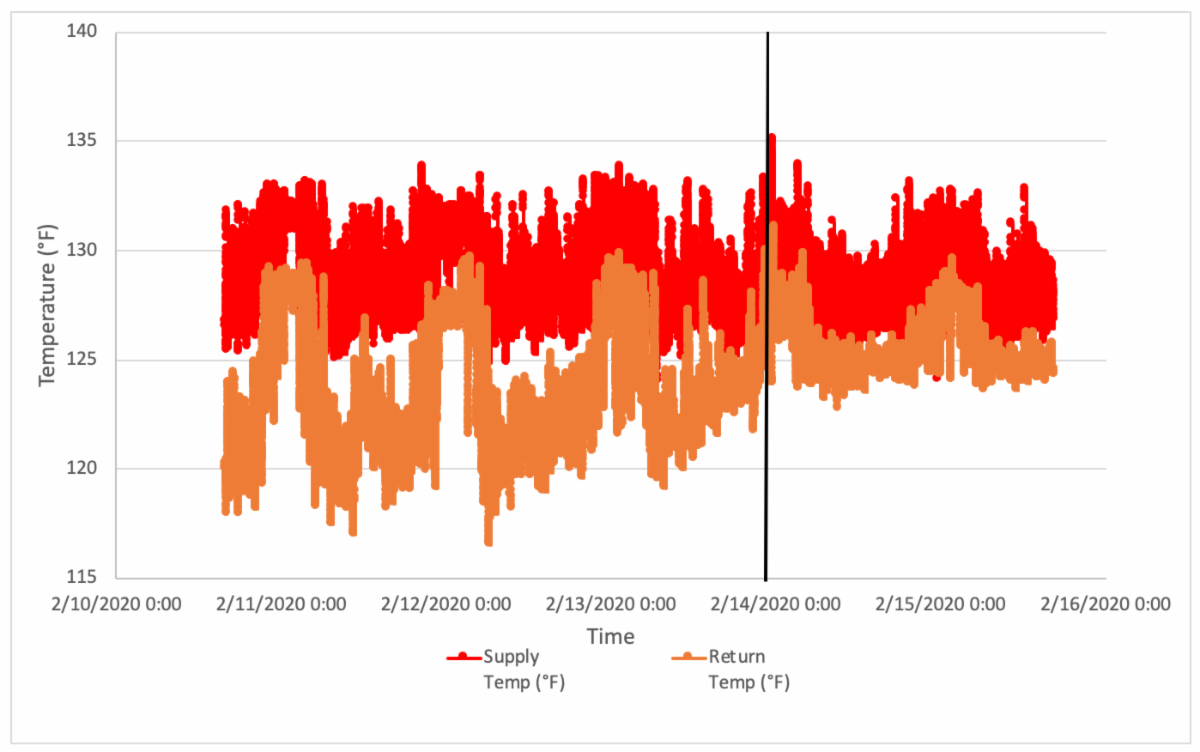
LOOKING AHEAD…
Crossover is prevalent among multifamily properties with central Domestic Hot Water (DHW) systems with recirculation of all ages and sizes. Retrofits conducted without addressing crossover issues can lead to increased post-installation costs and a potential reversion back to gas appliances. In order to avoid these outcomes, state energy efficiency and decarbonization policies and programs (needed to meet California’s greenhouse gas reduction goals) that include existing multifamily affordable housing must ensure that:
- Funding and technical assistance be made available to rent-restricted properties serving low-income households to remedy the operating and GHG impacts of crossover.
- Contractors and property maintenance staff can access training in identification and mitigation strategies.